Stop treating symptoms. Find the constraint.
Small executive teams (10–50) hit a point where effort becomes the operating model: manual workarounds, decision drag, cross-team handoffs that break under deadlines. We diagnose the constraint in your operating system — then engineer the response that removes it.
Operating System = People + Work + Decisions + Structure + Technology + Context
When performance degrades, the constraint is usually in the interactions — not in “motivation” or “better tools.”
Diagnose in 5 days. Build only what the constraint requires.
$180K+
structural failure prevented in one deployment
5 days
from intake to operational diagnostic
10–50
person exec teams — our core deployment environment
Workflow automation · Cloud architecture · AI telemetry · Monitoring dashboards · Built and deployed globally
The structural problem
The problem isn't effort. It's the constraint.
Your team is compensating for a system that wasn't designed for load.
At 10–50 people, the failure modes are predictable: decision rights blur, exceptions pile up, handoffs degrade, and your best operators become the routing layer. The organisation keeps moving — but only because people absorb the load the system should be carrying.
What looks like a people problem is often a design problem: unclear decision architecture, workflows that can't handle exceptions, structures that force escalation, and technology that creates friction instead of removing it.
We don't automate symptoms. We redesign the operating system so the constraint stops recurring.
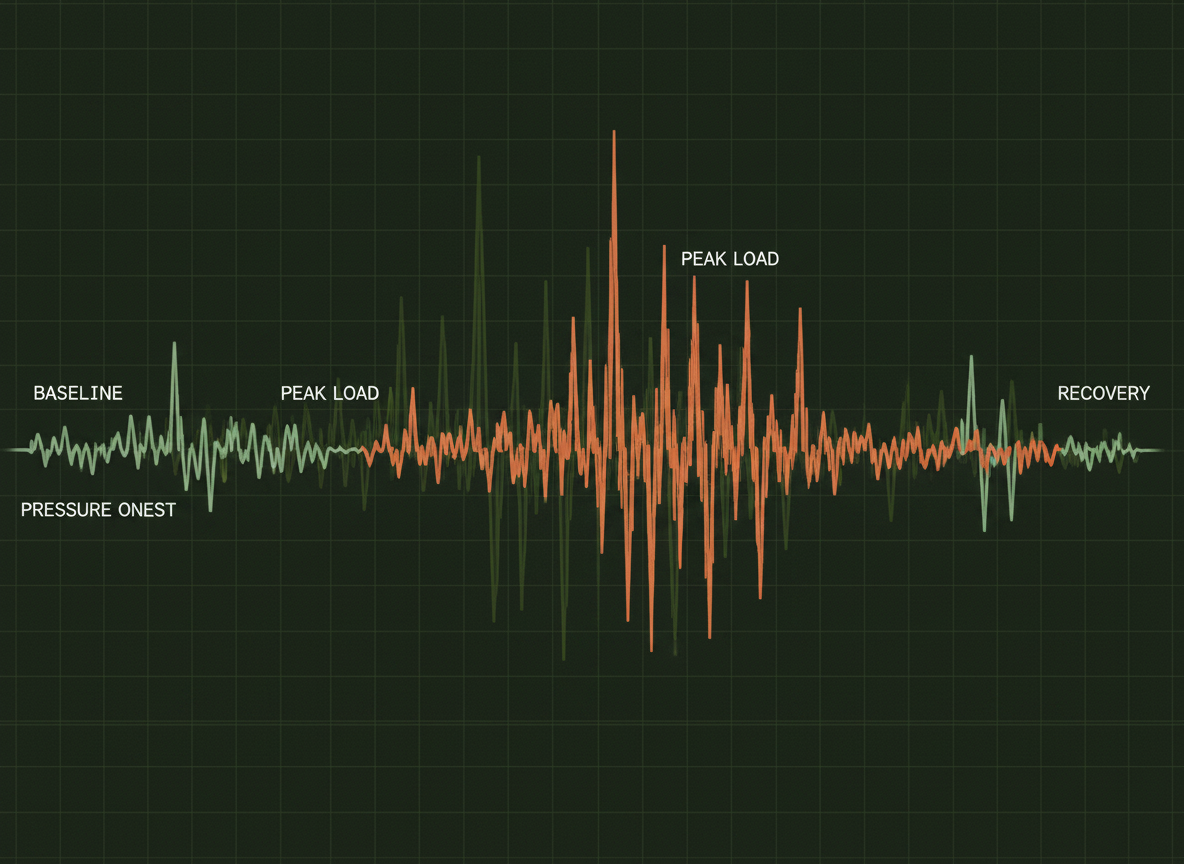
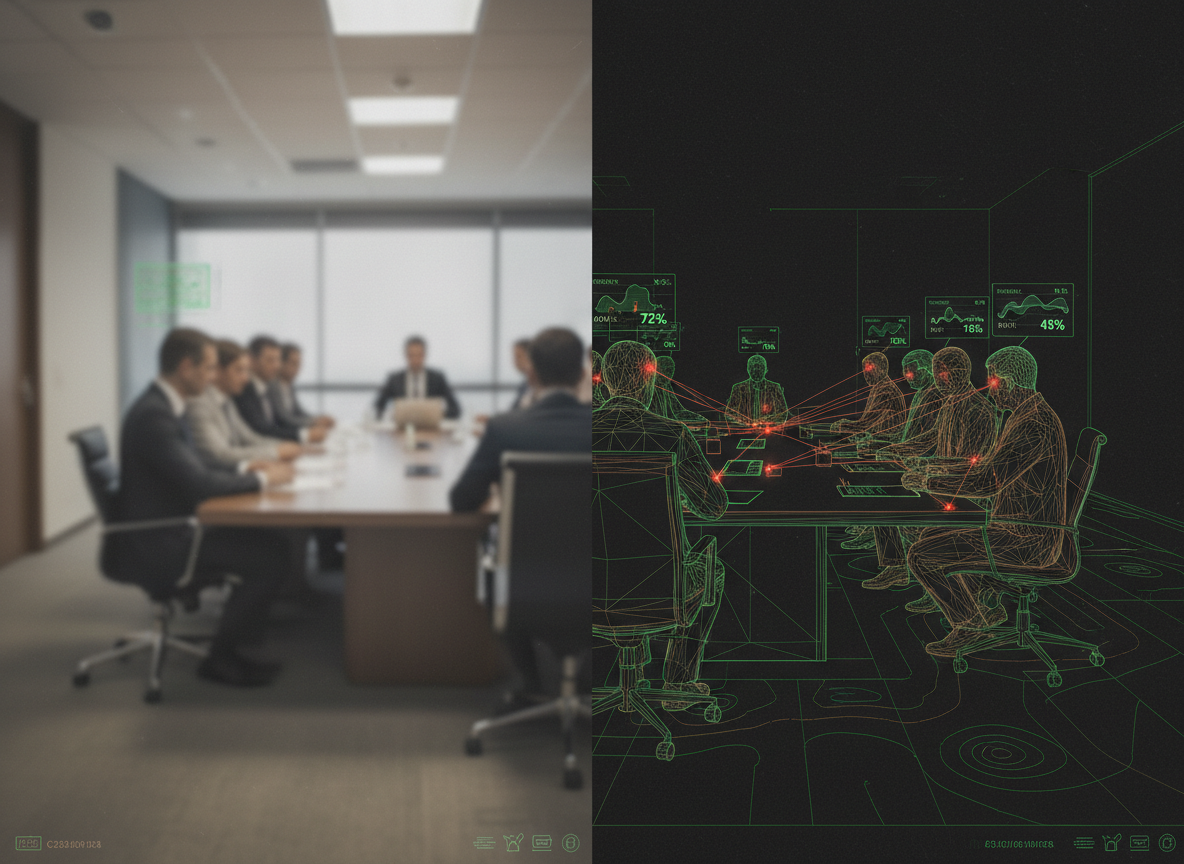
Sample output — Organizational load signal under operational pressure
of organizational friction is invisible to leadership
It surfaces as attrition, missed deadlines, or a key person leaving — long after the structural fault lines formed. We map them before they crack.
See researchcheaper to diagnose and fix than to rebuild after failure
One diagnostic engagement costs a fraction of a single structural failure, failed restructure, or system that breaks under scale. You fix it once, properly.
See researchof critical structural decisions fail within 18 months
Almost always an operational or structural mismatch — not a skills gap. The load problem existed before the decision was made. We surface it first.
See research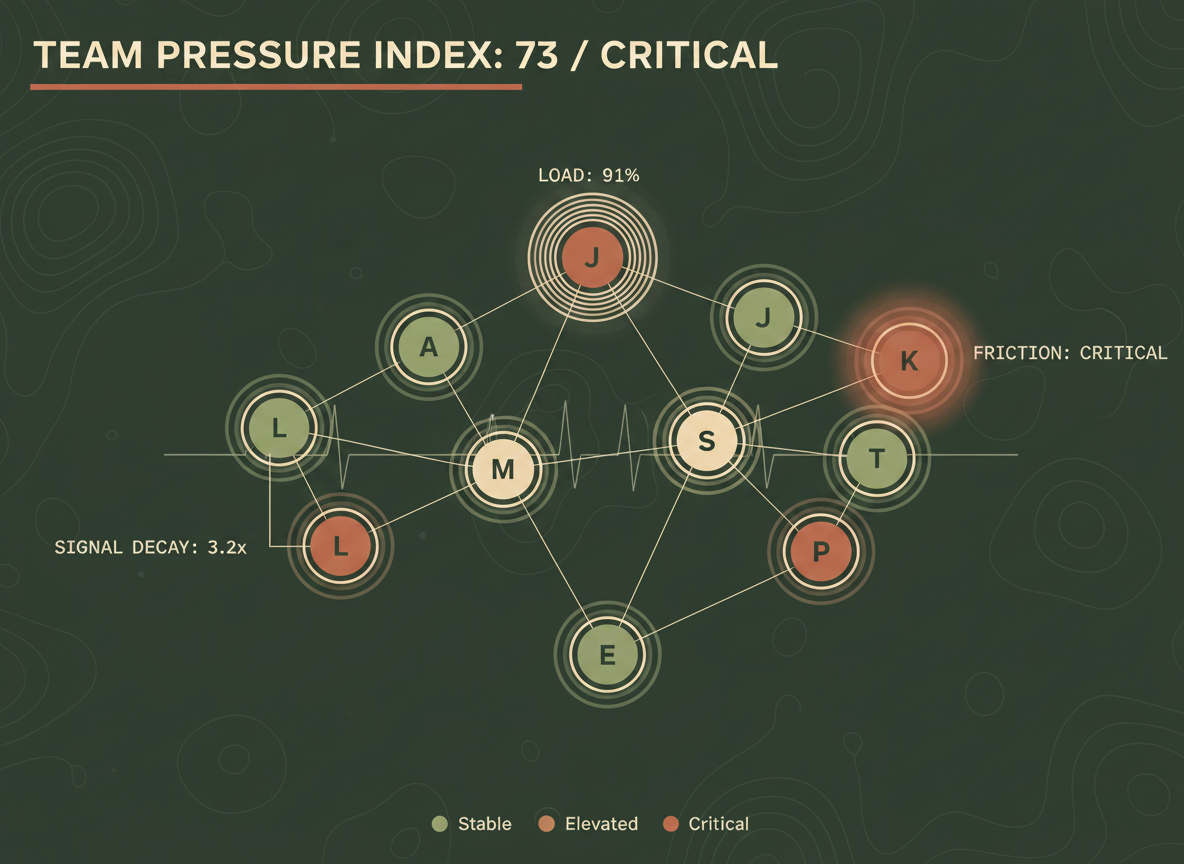
Sample output — Organizational load map & friction visualization
The Whole-System Lens
We diagnose the operating system — not the symptom.
Tensity is an Operational Systems Architecture practice informed by Human Factors. We examine how people, work, decisions, structure, technology, and context interact under pressure — then locate the constraint that's driving execution drag, rework, and leadership overload.
People
realistic capability, cognitive load, judgment under pressure
Work
demand, variability, exceptions, throughput constraints
Decisions
rights, escalation paths, latency, accountability
Structure
interfaces between teams, handoffs, incentives, ownership
Technology
tooling as intervention, telemetry as governance
Context
deadlines, risk, regulatory constraints, operating conditions
Only after the constraint is clear do we design the response — organisational, technical, or both.
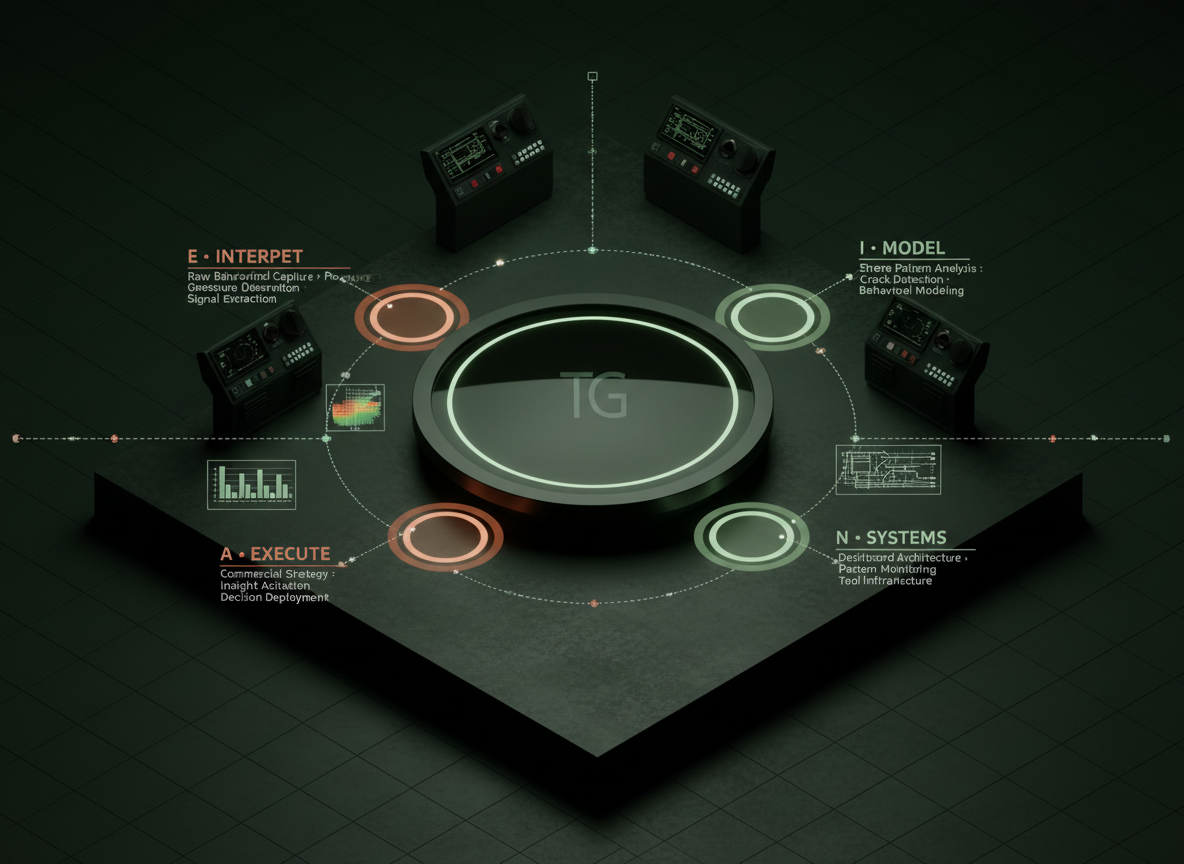
The A·I·N·E Framework
A closed-loop diagnostic-to-build system. From constraint to operational response.
A·I·N·E is our closed-loop diagnostic-to-build system. It's designed to surface constraints that don't show up in status meetings — then translate them into an operational response that holds under real load.
Commercial Strategy
A · Execute
Insight becomes commercial action
Led by Andrew Pettersen, Commercial Strategy scopes the business context, defines the intelligence brief, and ensures every operational insight translates into a decision your leadership can execute. Structural changes, team restructures, go-to-market pivots — every recommendation is designed to hold under the operational tension your business actually faces.
Function: Designs execution plans that don't just work in theory — they hold under load.
Operational Modeling
I · Process
Proprietary algorithms reveal the cracks before they spread
Backed by proprietary operational modeling algorithms and AI-driven analytics, this function takes system and workflow data and runs it through advanced modeling frameworks — identifying the specific variables causing structural failure in your team's performance. Patterns invisible to the human eye, surfaced with precision and translated into quantified risk intelligence.
Function: Proprietary algorithms that turn raw operational data into quantified risk patterns and predictive intelligence.
Systems Architecture & Remediation
N · Build & Monitor
We engineer the response the constraint requires — organisational, technical, or both
This is where diagnosis becomes implementation. Systems Architecture designs and builds the automated workflows, cloud infrastructure, telemetry systems, and monitoring dashboards required to permanently fix the bottleneck. Operational dashboards, reporting infrastructure, and load-resistant systems — so your organization doesn't just get a report, it gets a rebuilt operational stack.
Function: Builds the automated, load-resistant infrastructure that turns diagnosis into permanent resolution.
Human Factors & Operational Interpretation
E · Capture
Reading what others can't see
Every deployment starts with Human Factors. We capture how work and decisions behave under pressure — cognitive load, escalation patterns, communication strain, and the operating conditions that distort judgment. The system and workflow signals that spreadsheets and surveys miss entirely. This is the foundation of everything we advise, and the intelligence that feeds the entire A·I·N·E cycle.
Function: Decodes the story behind the operational strain so your leadership gets clarity, not guesswork.
Selected Remediations
Symptom → constraint → engineered response. No theatre. Just what held under load.
Apparent Symptom
“Execution is slow. Accountability is the problem.”
True Constraint
Decision architecture failure — 76% of routine calls escalated to the CEO.
Systemic Impact
- 72% reduction in decision latency (4.5 days → 4 hours)
- 16 executive hours/week reclaimed
- 2× volume capacity absorbed without leadership headcount growth
Apparent Symptom
“We need AI automation to speed up onboarding.”
True Constraint
Interface contract failure — Sales and Delivery disagreed on “client readiness.”
Systemic Impact
- Onboarding cycle time cut (14 days → 36 hours)
- 88% reduction in senior exception-routing
- Real-time visibility over handoff aging and pipeline velocity
Apparent Symptom
“Errors and burnout spike during peak windows.”
True Constraint
Cognitive overload + interface strain — operators context-switched across 7 tools under deadline pressure.
Systemic Impact
- 81% reduction in peak-window error rates
- Turnover reduced (25% → 0% over 6 months)
- 3× throughput per operator without added strain
System Remediation & Load-Resistant Infrastructure
Build isn't always software. It's the response the constraint requires.
Once the constraint is clear, the build falls into two categories:
1) Organisational & Human Systems Design
Workflow redesign, decision architecture, clearer ownership, restructuring interfaces between teams, and operating mechanisms that reduce cognitive load and exception chaos.
2) Technical Engineering
Automation pipelines, integrations, telemetry dashboards, and monitoring — deployed only where they remove the constraint and improve governance.
If the fix is a better decision flow, we build that. If it's infrastructure, we build that. If it's both, we integrate them.
Engagement Path
Three steps. Diagnose → Build → Monitor.
100% Diagnostic Credit Guarantee
We don't charge you for high-priced homework. If you move forward with an Implementation Sprint within 30 days of your audit, 100% of your $7,500 diagnostic fee applies directly as a credit toward the build.
Operational Pressure Audit
We map your exact friction points, deliver a clear failure-risk report, and show you the precise system buildout needed to resolve it.
- Operational load mapping
- Process & technology friction analysis
- Failure-risk report with prioritized fixes
- 30-minute debrief call
Implementation Sprint
We take the diagnostic insights and re-engineer your core technical stack — building custom AI workflows, automation pipelines, and monitoring dashboards.
- Custom automated workflow deployment
- Cloud infrastructure buildout
- AI telemetry & monitoring systems
- Team training & handover
Ongoing Systems Governance
Fractional CTO / Systems Lead. Continuous monitoring, optimization, and strategic guidance to ensure your systems stay load-resistant as you scale.
- Continuous operational monitoring
- Monthly systems health review
- Architecture optimization
- Strategic technical advisory
What We Build
Four capabilities. One closed-loop framework. Real systems at the end.
You're not hiring a consultancy. You're deploying a systems engineering capability. We diagnose constraints across the full operating system, then build the minimum viable changes that remove them — decision architecture, workflow design, governance, and (when it's the right intervention) automation, integration, and telemetry.
Capability
Full A·I·N·E CycleConstraint Diagnostics (Whole-System Read)
A structural read of how your operating system behaves under load — where decisions stall, work queues form, and exceptions break execution.
How we build it → Senior specialists (A + E) scope the organizational context and capture operational signals at scale. Proprietary algorithms (I) model systemic friction and structural failure patterns. Infrastructure protocols (N) build organization-wide monitoring and reporting systems for ongoing visibility.
What you get
- Organizational operations audit
- Complexity & operational load mapping
- Communication structure analysis
- Transformation roadmap & strategic advisory
Capability
Full A·I·N·E CycleHuman Performance & Decision Systems
Cognitive load, judgment under pressure, decision rights, communication flows, and leadership operating conditions — designed for, not assumed.
How we build it → Senior specialists (A + E) scope context and capture operational load signals. Proprietary algorithms (I) quantify risk patterns and friction concentration. Infrastructure protocols (N) build monitoring dashboards and automated alert systems so the intelligence holds after the engagement.
What you get
- Team operational map & friction analysis
- Execution vulnerability report
- Operational load risk assessment
- Intervention strategy & operational roadmap
Capability
Full A·I·N·E CycleWorkflow & Handoff Architecture
Cross-team interfaces, acceptance criteria, routing, exception handling, and governance so work doesn’t disappear between functions.
How we build it → Senior specialists (A + E) scope context and capture leadership operational signals. Proprietary algorithms (I) model decision-making patterns and failure modes. Infrastructure protocols (N) build leadership dashboards and decision-support systems that outlast the engagement.
What you get
- Decision-making pattern analysis
- Leadership operational load profiling
- Communication-under-strain audit
- Execution stability framework
Capability
Full A·I·N·E CycleTechnical Engineering (Interventions + Telemetry)
Automation, integrations, data pipelines, and monitoring built only where they remove the constraint — with visibility that holds after the engagement.
How we build it → Our senior specialists (A + E) scope the context and capture operational signals. Proprietary algorithms (I) quantify risk patterns and failure modes. Infrastructure protocols (N) build monitoring visibility and automated workflows so the intelligence holds after the engagement.
What you get
- Cross-team handoff & friction assessment
- Role-environment load compatibility analysis
- Go/no-go recommendation with evidence brief
- Leadership debrief session
Why Tensity Group
Not consultants. Not coaches. We build the fix.
Most firms give you a report and a recommendation. You still have to figure out how to implement it. We skip the middleman — diagnose the structural failure, design the solution, and build the automated infrastructure that makes it permanent. For small executive teams where the gap between diagnosis and action is the whole problem.
Traditional Approach
Diagnose, report, leave
Tensity Group
Diagnose, build, monitor
We are not
- ×Management consultants who diagnose, report, and leave you to implement it.
- ×Culture consultants or engagement survey firms.
- ×Standard IT dev shops writing code without understanding your organization.
- ×HR consultants running workshops that change nothing under real operational load.
- ×Assessment vendors selling generic profiling tools with no implementation capability.
- ×Software vendors selling dashboards without building the system behind them.
What we deploy
- Operational Systems Architects — we find the fracture, then build the automated fix. Tools, workflows, infrastructure.
- The A·I·N·E Framework — two principals backed by proprietary algorithms and infrastructure design protocols.
- We skip the middleman — diagnose the structural failure, design the solution, and build the automated infrastructure that makes it permanent.
- From diagnosis to implementation: automated workflows, cloud architecture, AI telemetry, and monitoring dashboards.
- Built for 10–50 person executive teams where every operational failure has a direct cost — not enterprise theory applied to small teams.
- 25 years IT/Cloud architecture, AI systems, and operational diagnostics — deployed, not theorized.
What it looks like when it works
Real deployments. Real results. Systems that held.
Every engagement ends with a built system and a measurable business result — not a theory.
Prevented a $180K structural failure before it compounded
A Series B startup was about to restructure a critical function based on surface-level performance data. We deployed the full A·I·N·E cycle: Operational Interpretation captured signals during structured load assessment, Operational Modeling modeled the load-state dynamics across the team, Commercial Strategy delivered the intelligence brief. The real bottleneck wasn't the people — it was a decision-flow misalignment that would have cascaded into a $180K+ recovery cost.
Outcome
$180K+ saved in one deployment
Surfaced invisible cross-functional friction before a critical launch
A hospital operations team was 8 weeks from a major system migration. Our operational load mapping revealed communication strain between three key functional leads that no one had flagged internally. Operational Interpretation decoded the load-response patterns, Operational Modeling modeled the friction concentration, Systems Architecture built a monitoring framework to track the intervention. A targeted process restructure prevented a project-threatening structural failure.
Outcome
Launch delivered on time
Eliminated senior leadership turnover by diagnosing systemic complexity overload
A mid-size engineering firm had lost three senior leaders in 14 months. Our organizational diagnostics identified a systemic operational load pattern in how decisions were escalated under complexity — too many decision points, unclear escalation paths, and structural misalignment between project delivery and commercial functions. The full A·I·N·E cycle resulted in a restructured decision flow and governance model that reduced leadership strain by 40%.
Outcome
Zero leadership exits in 12 months
How We Operate
Two principals. Four functions. One integrated build framework.
Every Tensity Group deployment is led by Andrew (Commercial Strategy) and Elthea (Operational Interpretation) — the two principals who own the client relationship and the intelligence brief. The Operational Modeling (I) and Systems Architecture (N) functions are delivered by specialist operators working within the A·I·N·E framework under Andrew's direction.
Commercial Strategy
Principal — Andrew PettersenA · Execute
A·I·N·E Phase: Execute
Led by Andrew Pettersen. 15 years in high-stakes commercial execution. Builds strategy that holds under operational load — not theory that collapses at first contact with reality.
Commercial Strategy leads the commercial advisory side of every deployment. This function scopes the business context, defines the intelligence brief, and translates operational data into execution plans that hold under pressure — structural changes, team restructures, go-to-market pivots, and leadership interventions.
Operational Modeling
Specialist OperatorsI · Process
A·I·N·E Phase: Process
Proprietary operational modeling algorithms and AI-driven analytics, deployed by specialist operators under Andrew's direction. Turns raw operational data into quantified risk patterns invisible to the human eye.
Operational Modeling builds the analytical frameworks that identify the specific variables causing structural failure in team performance. Backed by proprietary algorithms and advanced AI modeling, this function is staffed by specialist operators who surface patterns that spreadsheets, surveys, and intuition miss entirely — then quantify them into actionable risk intelligence.
Systems Architecture & Remediation
Specialist OperatorsN · Build & Monitor
A·I·N·E Phase: Build & Monitor
Infrastructure design protocols and systems engineering, executed by specialist operators. Builds the automated workflows, cloud architecture, and AI telemetry systems required to permanently fix the bottleneck.
Systems Architecture doesn't just monitor — it builds. This function is staffed by specialist operators who design and deploy the automated workflows, cloud infrastructure, custom dashboards, and AI-driven monitoring systems that turn a one-time diagnosis into a permanent operational fix. The intelligence compounds because the infrastructure holds.
Operational Interpretation
Principal — Elthea PettersenE · Capture
A·I·N·E Phase: Capture
Led by Elthea Pettersen. Reads the system and workflow signals spreadsheets and surveys miss entirely. The foundation of every intelligence brief we deliver.
Every deployment starts with Operational Interpretation. Led by Elthea, this function captures raw load-response patterns, communication breakdowns, and decision-making under complexity. It designs the operational scenarios and translates complex system signals into clear, actionable intelligence that feeds the entire A·I·N·E cycle.
Execute
Commercial strategy & decision deployment
Andrew Pettersen — Principal
Process
Operational pattern analysis & risk quantification
Specialist operators — Proprietary algorithms
Build & Monitor
Systems engineering & load-resistant infrastructure
Specialist operators — Infrastructure protocols
Capture
Raw operational capture & signal extraction
Elthea Pettersen — Principal
Execute · Process · Build · Capture — four intelligence functions, one closed-loop framework
Who we work with
Built for small executive teams where every operational failure costs real money.
We focus on organizations with 10 to 50 people in the executive or head office layer — where the gap between how things are running and how they should run is already costing you, even if you can't put an exact number on it yet.
Founder-Led Businesses (10–50 people)
The founder is still the decision bottleneck. Processes that worked at 5 people are breaking at 20. The team is capable — the system isn't built yet. We diagnose the friction and build the infrastructure so the founder can lead instead of manage.
Ops-Heavy SMBs Scaling Fast
Revenue is growing but operations aren't keeping up. Manual handoffs, communication gaps between functions, and technology that was bolted on rather than designed. We map where the load is concentrating and build the automated systems to handle it.
Tech-Aware Teams Ready to Modernize
You know AI and automation can solve your operational problems — you just don't know where to start or what to build first. We diagnose the highest-leverage friction points and build the right systems in the right order.
One question to qualify yourself
If you removed the time pressure from your team for one week, would the operational problems disappear — or would they still be there?
If they'd still be there, the problem is structural. That's what we fix.
Show Me Where the Friction IsInitiate
15 minutes. We'll show you where the friction is — and what to build first.
No pitch. No deck. A direct conversation about where your operation is fracturing and whether a diagnostic is the right next step. Most founders leave with more clarity than they've had in months.
What happens in a qualifier call
- 15 minutes — no pitch, no sales deck
- We locate exactly where your operation is fracturing under load
- Confirm whether a diagnostic is the right next step
- If it's a fit, we walk you through what we build — you decide
No commitment. No follow-up cadence. We respond within 1 to 2 business days.
Or choose a different path
Already know the scope? Commission a specific audit
Not ready? Start with a free operational checklist